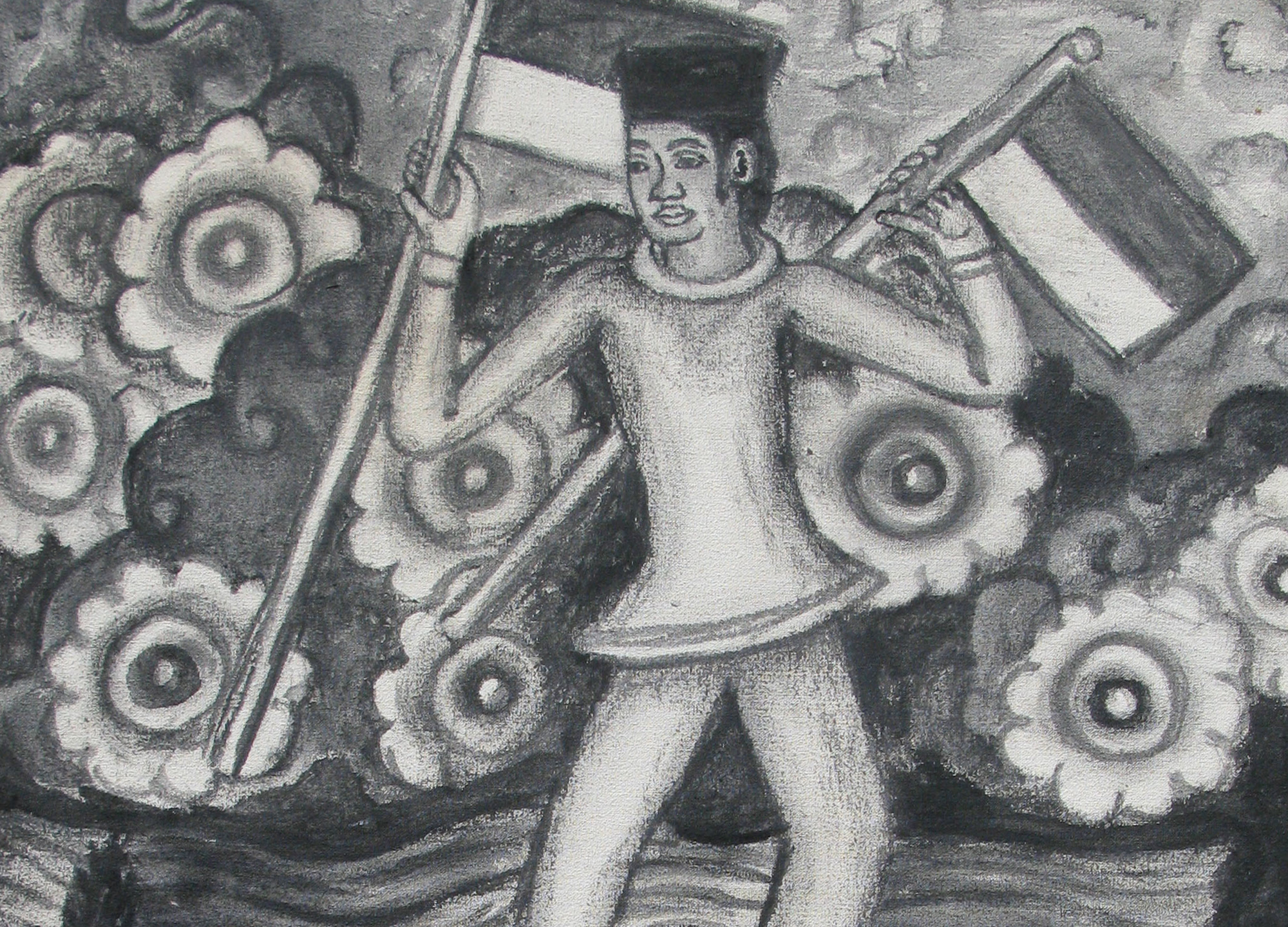
ROH is delighted to share with you our exhibition Warna Hidup, a solo exhibition by Oototol.
Marking Oototol's first solo exhibition in Jakarta, this two-venue presentation at ROH and Komunitas Salihara captures the pluralism that defined the late Balinese artist's approach. Working in Chinese ink with bamboo pens and brushes, Oototol (b.?–2009) developed a consistent practice within a constellation of practitioners in Bali known familiarly as Murni, Mokoh, Mondo, whose formal affinities register across the artist’s works. Often framed within these influences, this presentation focuses rather on an engagement with Oototol’s singular vision.
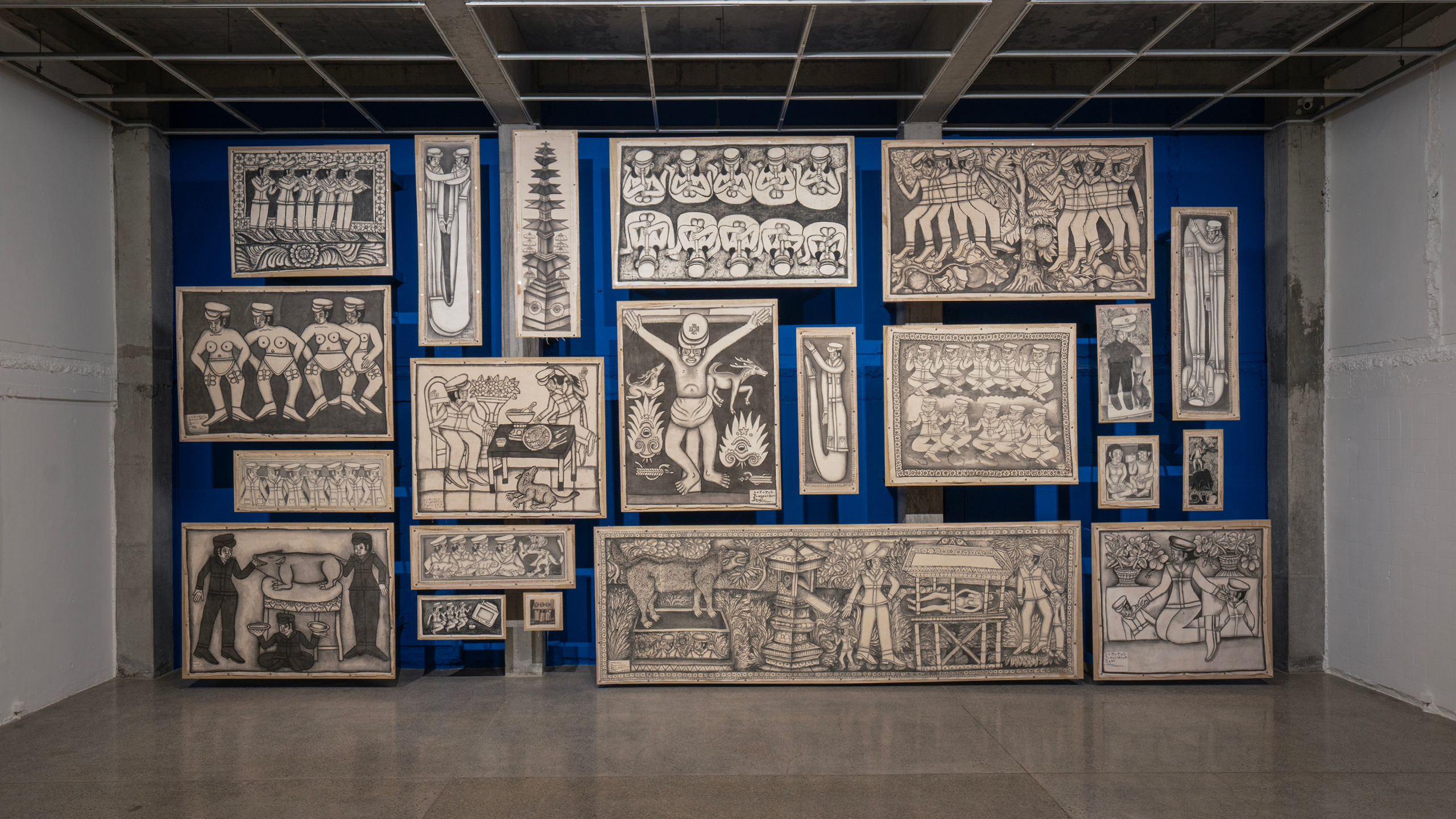
The uniformed figures, which are also self-portraits, are a constant narrator appearing throughout most of the paintings, an image said to have been influenced by the artist’s interest in Indonesia’s first president, Soekarno. In Oototol's paintings, they are seen harvesting rice, sharing meals, communing with one another, giving birth, killing, playing with animals, and absorbing all forms of human activity into the uniform's logic. At times, non-human creatures are also wearing hats and uniforms. The artist seems to express a fanciful interest in modes of transport: airplanes, motorbikes, mythological creatures ferrying these characters across land and water. But Oototol also flips this dynamic in other works, where people carry animals instead. In this visual universe, there appears to be nothing a soldier cannot do. This capacity to move so seamlessly between the very personal, historical, and cosmological constitutes one of the many rich facets of Oototol's practice.
What appears at first to be basic or mundane observations of daily Balinese life belies the compositional and conceptual complexity of these paintings. They are dense with metaphorical allusion, in a manner that considers the polyphony of reality and the imaginary in non-hierarchical company. The innocence and playfulness of Oototol’s approach recalls the spirit of Fischli and Weiss, whose own pursuit of profound truths arrived dressed in an aesthetic language that can be understood by anyone. This being said, Oototol's figures still exist within structures of ceremony and societal taxonomy, faithful to a Balinese cosmology of life and death as twin guiding forces in daily life. Yet, throughout the artist’s opus, these figures reappear to dabble in and beyond the edges of frames, suggesting a life lived outside the norm. The uniformed self-portrait, recurring across the paintings, becomes a vehicle for this tension, at once part of the social fabric while distinct in terms of identity and position. The same figure wearing the same uniform is placed repeatedly into different contexts and encounters, until what was meant to signify control reveals an extraordinary plasticity.
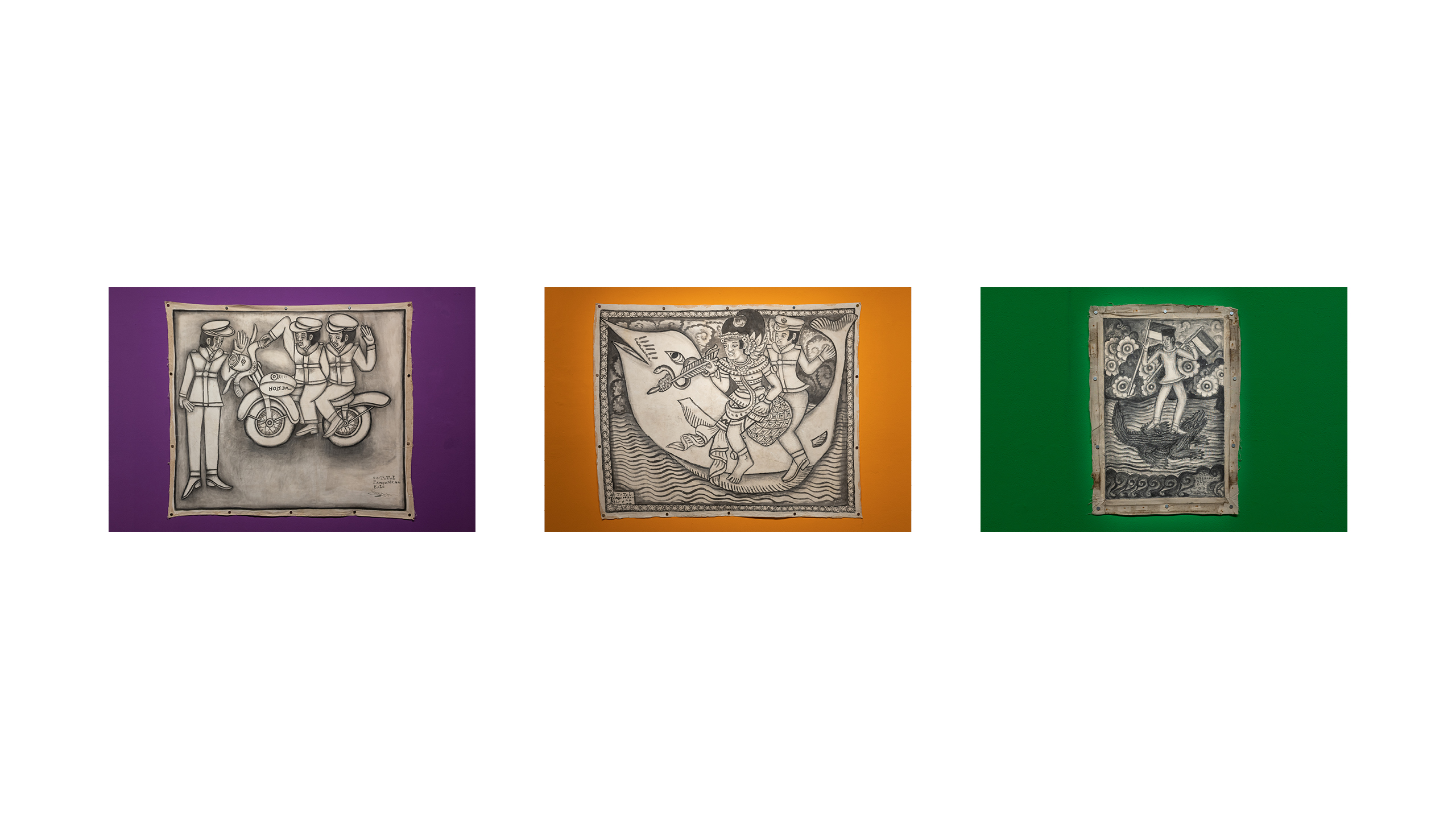
Oototol’s practice may express a certain attitude of subversion or critique in the artist’s seeming debasement of a common symbol of power, or how that same power seems to absorb life into its logic in its own mockery. Such readings risk domesticating what is genuinely strange and unassimilable in the work. In a present where such iconography has become inseparable from competing visions of political futurity, it is worth exploring what Oototol left us that we have not yet been able to process, and what questions they continue to place on us who seek to wrap our minds around them today.
The exhibition’s title, Warna Hidup, in Indonesian meaning “the colour of life”, seems contradictory to Oototol’s choice to work exclusively in monochromatic Chinese ink. Despite this constraint, Oototol’s work nevertheless expresses many different spectrums of life and culture, both in Pengosekan and Bali, where the artist was born, but also in relation to universal truths that resonate with us all. The absence of color becomes its own kind of abundance, a constraint that forces every complexity into the interplay of mark, surface, and space. Oototol’s paintings express a mind and spirit that is transgressive, radical, and contemporary, so much that the works reverberate and continue to be relevant as a reflection of what is happening today.
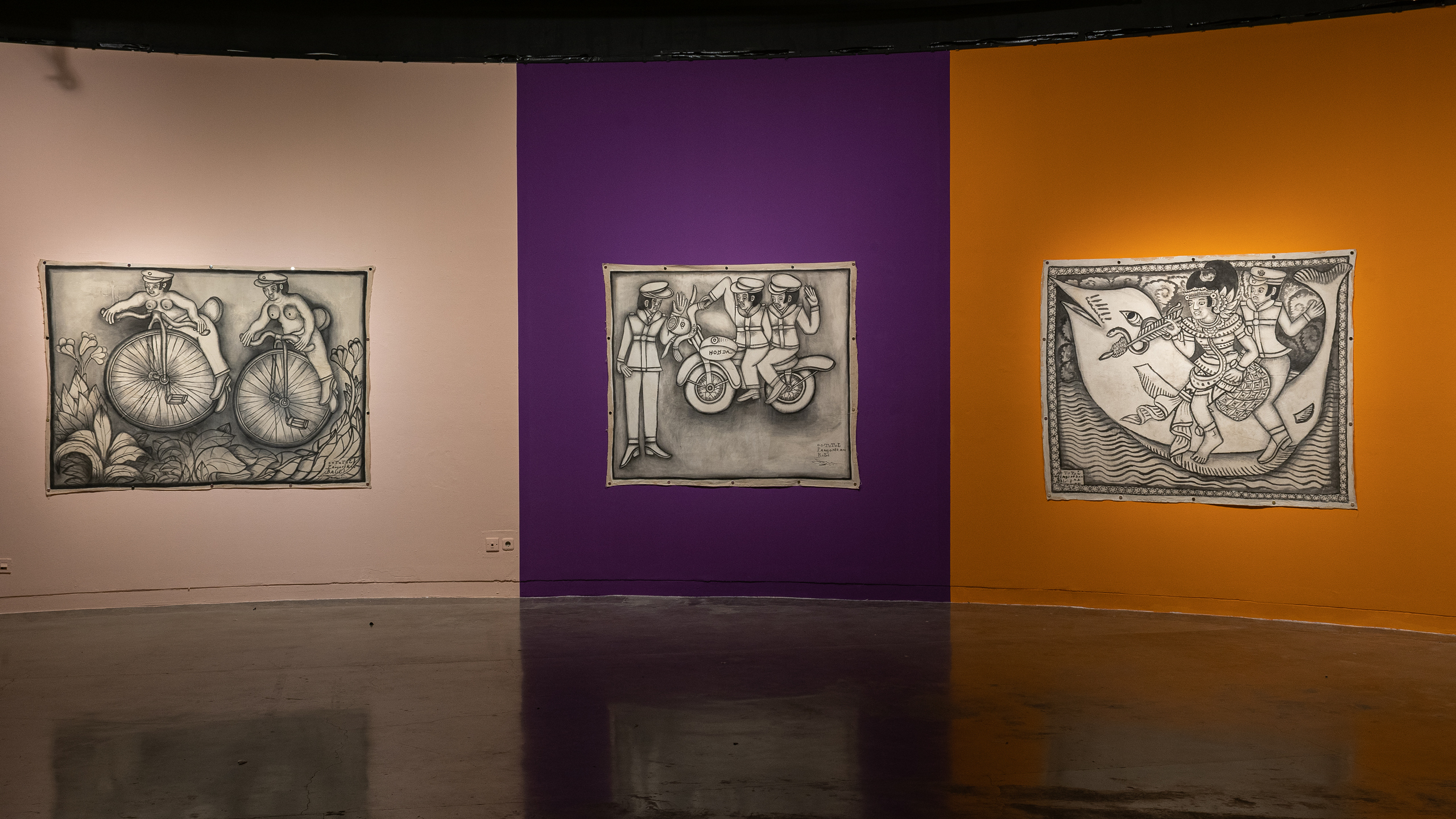
Essays by Hera Chan, Roger Nelson, and Ibrahim Soetomo accompany the exhibition, each extending the scholarship around Oototol's life and thinking in different directions. A public program curated by Putu Sridiniari opens further space for sitting and thinking with what is on display. These are early gestures toward a concerted effort to focus our attention on the works of an artist who, in Oototol’s travelling imagination, continues to stray (to borrow a term from Nelson’s essay) from us.
Oototol
Warna Hidup
7 March – 3 May 2026 at ROH
8 March – 26 April 2026 at Komunitas Salihara
ARTIST
Born 1930 - 2008
Lives and work in Pengosekan, Bali
Oototol, originally named Dewa Raram, Residing in the village of Pengosekan, Bali, Oototol's early life was markedly different from many around him. While traditional painting became a burgeoning occupation in Pengosekan, drawing many into its fold, Oototol remained an anomaly—a simple, illiterate man detached from the commercial aspirations surrounding him.
View Artist