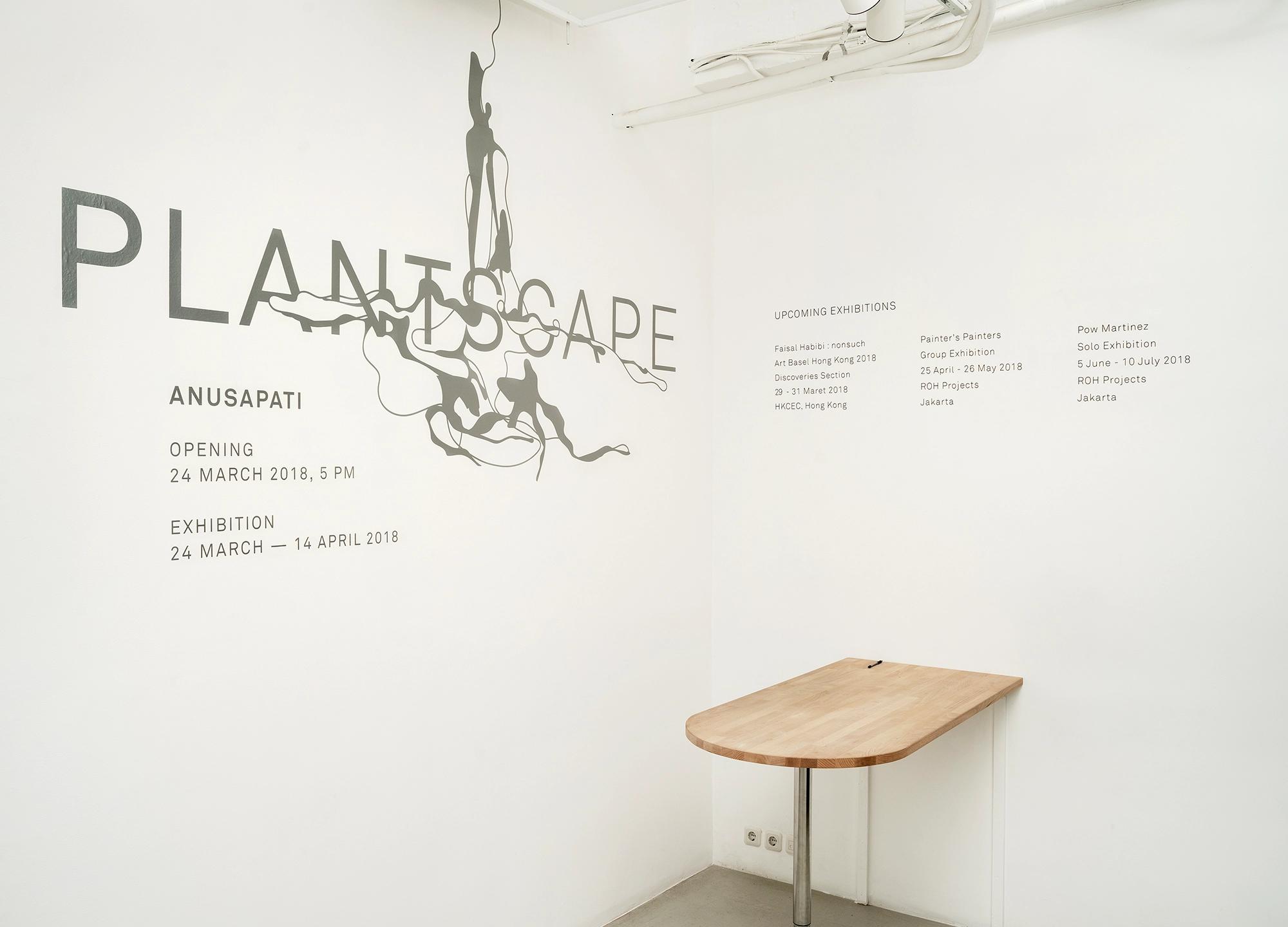
All throughout his artistic journey, Anusapati has worked with wood and everything else surrounding wood. As far as the history of Indonesia goes, establishment and development have been centered in Jakarta and its surroundings, both the areas that are then claimed as Jakarta and its satellite cities. These two things don’t seem related to one another but they can be analogous.
Anusapati spent his childhood in an area not too far from an edge of the world. With his childhood friends, they would remind each other, “Watch out, don’t play to the end of the world!” As if the end of the world was just around the corner! It turns out that the end of the world was a phrase that pointed at the endless rubber trees near their residence. The plantation was so big that the rubber trees seemed to be endless. Until now, the area is aptly named Kebun Karet (Rubber Garden). Since the Dutch colonial era, rubber plantation areas can indeed be up to hundreds of hectares around Batavia. The New Order’s industrialization policy was a milestone for the changes of this land’s usage. Especially in villages located on the edges of Jakarta. Since the early 70s, the construction of factories and the changes gearing towards industrial zones occurred almost simultaneously on the outskirts of Jakarta. Today, Anusapati’s childhood area no longer exists. The endless rubber trees have become Jagorawi toll road, malls, garment factories, houses, camping grounds, etc.
“Memories are a source of inspiration, explanation and knowledge,” Anusapati said.
Levels and dramatizations are a requirement in this thinking sequence. Memory is the mind’s ability to reproduce feelings or impressions based on something that has been experienced. While remembrance is the reappearance of a thought that existed once because it was triggered by something outside of the self. “Memories, yeah, not remembrances.”
He continued.
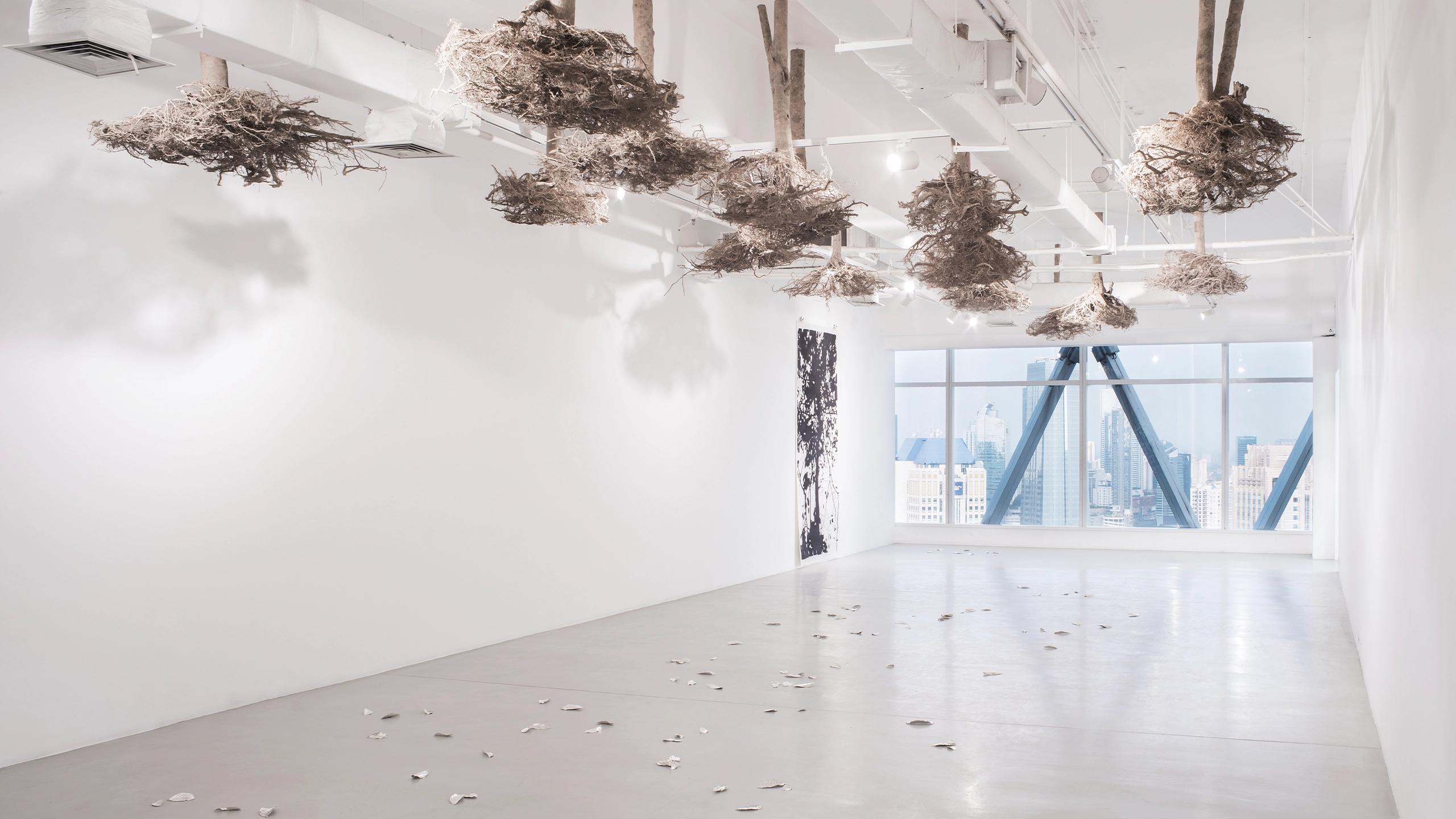
It is his memories that he is offering to us all through his artwork. The memories that inspire his curiosity, his quest, as well as his artistic practices are cultivated into the form of knowledge of space, time and a piece of reality in this world. For Anusapati, memories are realities from the past. What he offers us is his stance to these memories, the nature surrounding it, as well as our current ecosystem.
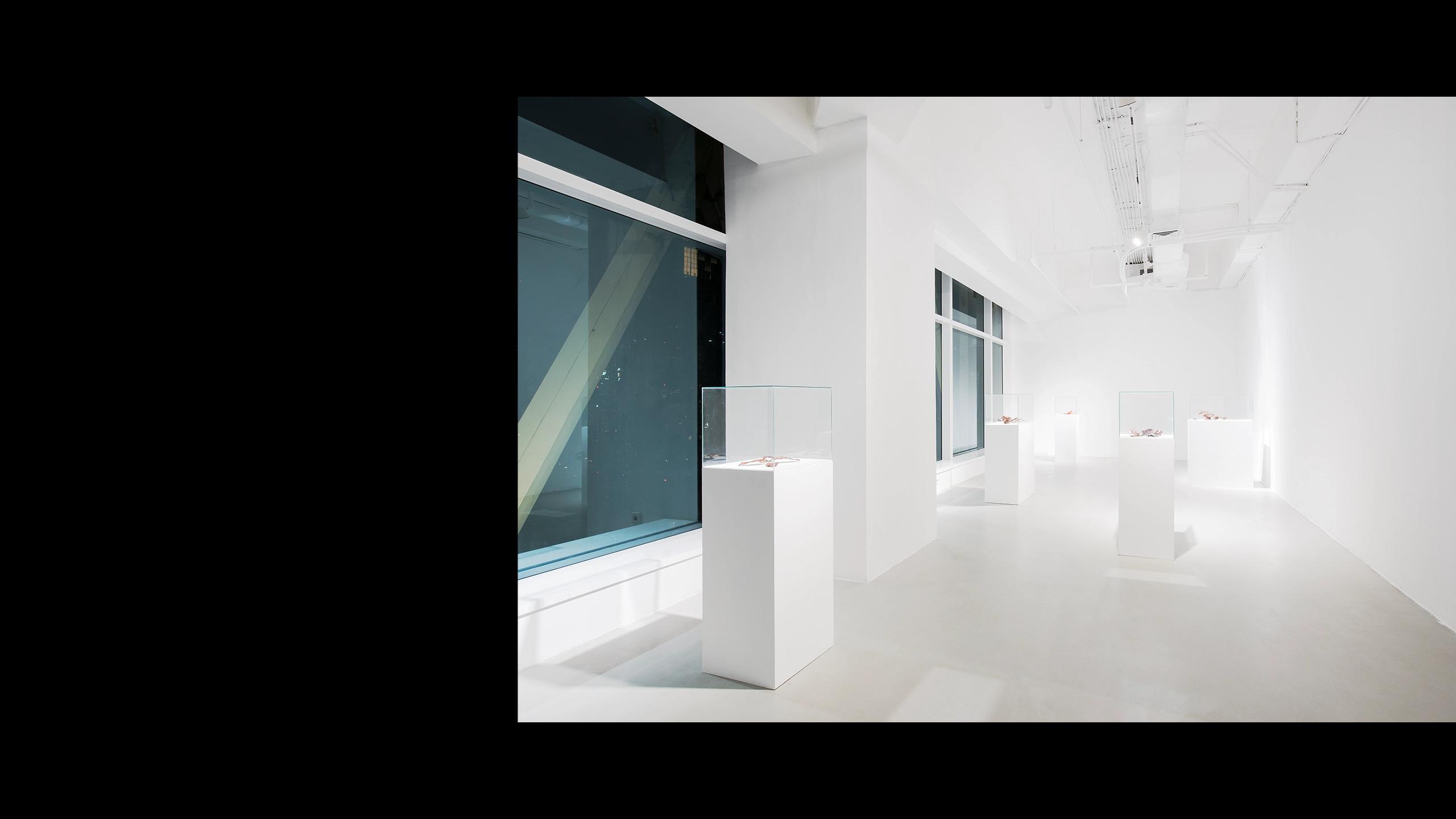
Wood, along with the trees and its habitat, are not mere materials for Anusapati. The greeneries from his childhood times has given him the reason to make art, and it also has become the main source of ideas for him. In this exhibition, Anusapati uses two approaches to cultivate his artwork. The first tends to be empirical, spatial and intuitive. While the second is more hypothetical, cerebral and rational. Both of them are literal in Anusapati’s collection of thoughts and his manifestation are thusly divided into two rooms. In Anusapati’s artistic practices, these two exhibition rooms represent two different types of poetics. He built the first room to invoke our feelings and emotions. Whereas the second room was built to tickle our intellectual with regards to the objects he has presented. The first room intrigues you, while the second room assures you of your own feelings.
Welcome to the ‘end of the world’!
Artist
Anusapati was born in Surakarta, Central Java, in September 1957. He completed his studies at ASRI Yogyakarta in 1983, and at the School of Art and Design, Pratt Institute, New York, USA (1990). Currently, he lectures at the Faculty of Art, Indonesian Art Institute (ISI) Yogyakarta. He works extensively using bamboo and wood (especially teak wood), as the manifestation of his nature-abiding attitude—in addition to working with bronze, found objects, and creating installation works. His sculptures are built out of objects from daily life, such as the traditional slit drum (kentongan), boats, traditional chignons (konde), etc, which gain new volumes and forms that liberate.
His works have been shown not just in Indonesia, but also in the US, in Europe, Australia, and Japan. For instance, his solo exhibition for the MFA Thesis Exhibition, Pratt Institute, New York, USA (1990); Reconstruction, at the Kitamoto Cultural Center Gallery, Saitama, Japan (1997), and The Story of Tree, Mon Décor Gallery, Jakarta (2008).
His works have been included in a number of group shows, such as: the 9th Jakarta Art Bienniale, Taman Ismail Marzuki, Jakarta; and India Triennale VIII; as well as The Sculpture Survey 1, Gomboc Galleries, Australia (2000); and Ekspansi (Expansion), Indonesian National Gallery, Jakarta (2011). In addition, he also participated in an artists’ residency and workshop program in Australia (2001), as well as symposiums in the Philippines (1994) and Taiwan (2005).
His works have been selected into the collections of a number of galleries and museums, including the Indonesian National Gallery, Jakarta; Langgeng Gallery, Magelang; Singapore Art Museum, Singapore; Queensland Art Gallery, Brisbane, Australia;
and the collection of the City Government of Kitamoto-Shi, Saitama-Ken, Japan.
Copyright belongs to The Artist
Text by Grace Samboh, translation by Achmad Sirman
Photography by Wirya Satya Adenatya
Courtesy of The Artist and ROH